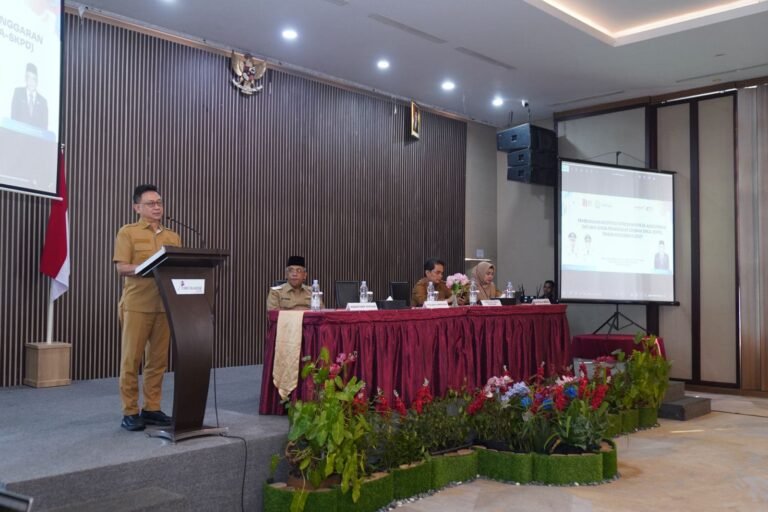
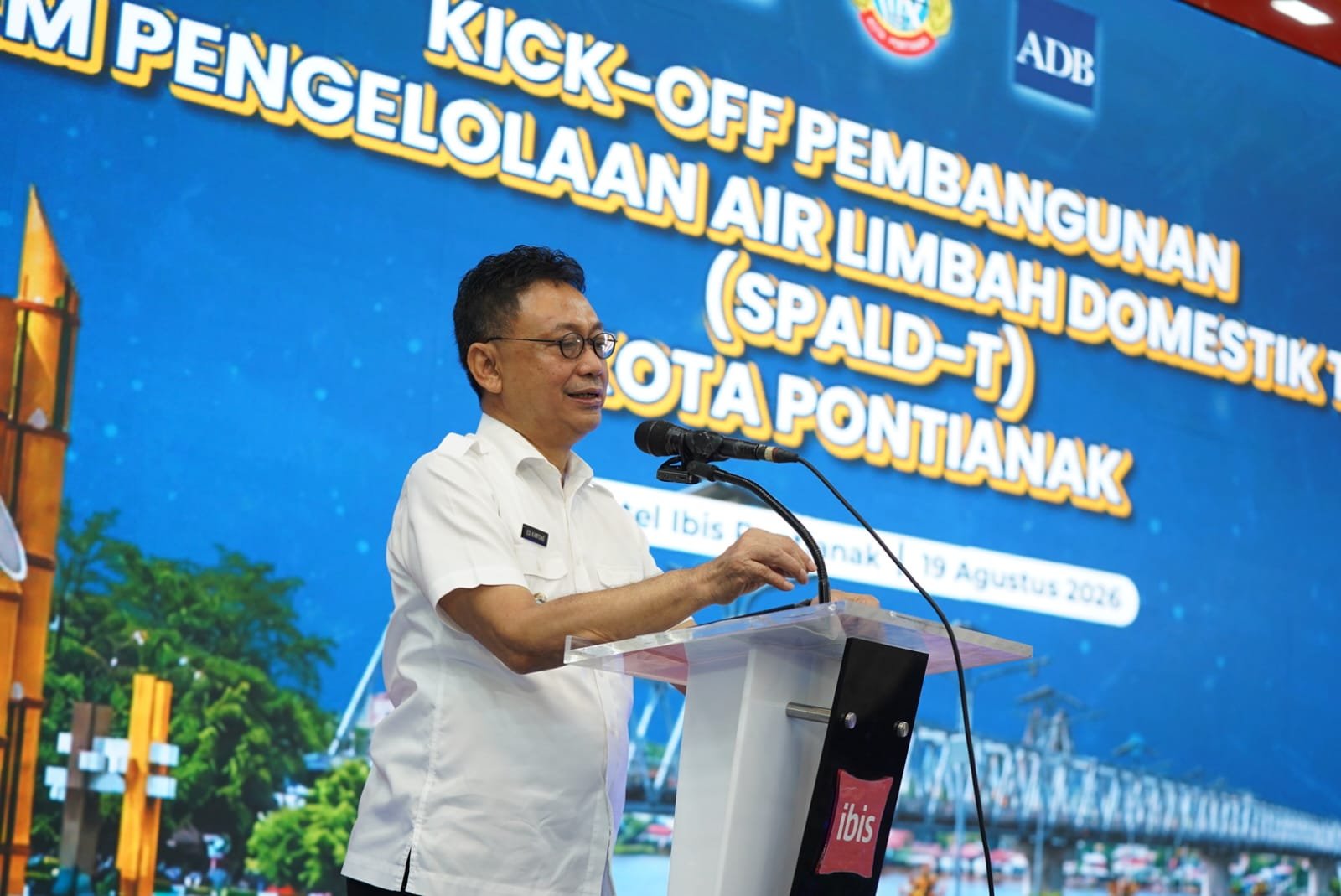
The construction of Pontianak’s Centralized Domestic Wastewater Management System (SPALD-T) has officially entered the construction phase, marking a major step toward improving sanitation, residential environmental health, and the overall quality of life for the city’s residents.
Pontianak Mayor Edi Rusdi Kamtono said the main SPALD-T network will extend from the Nipah Kuning Dalam area to Martapura. Construction will use both open-cut and jacking methods, depending on conditions at each location.
The project requires specialized engineering due to the depth of the primary pipelines, which will be installed between six and 12 meters underground. The primary network will then be connected to secondary and tertiary pipelines serving homes, offices, and other buildings.
“We will install the primary pipelines at depths ranging from six to 12 meters. They will then be connected to secondary and tertiary pipelines that directly serve homes and buildings,” Edi said following the kick-off of the Pontianak SPALD-T construction project at Hotel Ibis on Wednesday (August 19, 2026).
Under the system, domestic wastewater from toilets, floor drains, washing activities, and other household sources will flow through the pipeline network by gravity before being pumped and treated prior to its discharge into the environment.
“Household wastewater will be collected and treated into cleaner water,” he said.
Pontianak’s SPALD-T is targeted to treat up to 24,000 cubic meters of domestic wastewater per day and serve more than 15,000 connections, including households, offices, and commercial establishments.
Edi acknowledged, however, that the construction process will face several challenges. Pontianak’s soft and peat-rich soil conditions, groundwater levels, and limited space along several major routes will require careful technical management throughout construction.
Beyond technical challenges, parts of the project will pass through strategic routes used by heavy vehicles traveling to and from the port, as well as areas near offices, educational facilities, markets, and residential neighborhoods. Construction could therefore temporarily disrupt traffic and create other social impacts.
“These are challenges we will face during implementation, and they could cause issues on the ground, including traffic congestion and other social impacts,” Edi said.
He assured the public that the pipeline network would be constructed within roadways or designated road right-of-way areas, eliminating the need for land acquisition. Nevertheless, temporary impacts are expected, including slower traffic and the presence of heavy equipment and construction materials around work sites. The city government has prepared mitigation measures to address potential disruptions.
Once operational, the system will be managed by Perumda Tirta Khatulistiwa.
“The system will later be managed by Perumda Tirta Khatulistiwa, with a dedicated director responsible for sanitation,” Edi explained.
The SPALD-T project will be developed in phases through 2030. Based on the funding requirements presented by the Ministry of Public Works, the overall project is estimated to require approximately Rp1.7 trillion, with implementation divided into several stages and construction segments.
The centralized wastewater management system is expected to significantly improve sanitation conditions across Pontianak. Better management of domestic wastewater is expected to create cleaner, healthier, and more comfortable residential environments.
Acting Director of Sanitation at the Ministry of Public Works Sandhi Eko Bramono explained that wastewater management and clean water supply are closely interconnected. Proper treatment of domestic wastewater can help protect raw water quality and contribute to a safer drinking water supply system.
Sandhi noted that similar systems have already been implemented in several Indonesian cities and regions, including Jakarta, Banda Aceh, Jambi, Pekanbaru, Balikpapan, Denpasar, and Yogyakarta.
In Pontianak, however, the city’s geographical characteristics and soil conditions present distinct technical challenges. Wastewater pipelines generally operate without pressure and rely primarily on gravity, making construction accuracy—particularly the gradient of the pipelines—essential to ensuring that the system functions properly.
“Construction accuracy is crucial because wastewater pipelines are not pressurized and generally rely on gravity. Precision during construction, including the pipeline gradient, is therefore extremely important,” he explained.
Sandhi added that treated wastewater, or effluent, must meet the quality standards established by the Ministry of Environment before being discharged into the environment. In Pontianak, wastewater will be treated at two domestic wastewater treatment facilities located in Nipah Kuning and Martapura.
“The treatment process will eliminate pathogenic microorganisms so that the wastewater no longer becomes a source of biological pollution before it is discharged into the river,” he said.
SPALD-T construction will be carried out gradually across several roads, with implementation adjusted according to the project’s construction phases and schedule. Planned locations include Komyos Sudarso Street, Pelabuhan Rakyat Street, Sapta Marga Street, Atot Achmad Street, Karet Street, Alpokat Permai Alley, Yuka Complex, DR. Setia Budi Street, Ketapang Street, Hijas Street, Mahakam Street, Tanjungpura Street, Siam Street, Jendral Urip Street, Kenari Street, Rajawali Street, Wolter Monginsidi Street, Nusa Indah I Street, Nusa Indah III Street, and Ir. Juanda Street.
The government has also provided public complaint and information channels regarding the project via email at cisp03kotapontianak@gmail.com and by telephone at 0821-877-9464 during working hours.
About the Author